 Organic Chemistry
Hybridization: Definition, Types, Rules, Importance
April 15, 2023
Hybridization Hybridization is a chemical concept that involves the mixing of atomic orbitals to form hybrid orbitals with different energ…
Read more
Organic Chemistry
Hybridization Hybridization is a chemical concept that involves the mixing of atomic orbitals to form hybrid orbitals with different energ…
Read more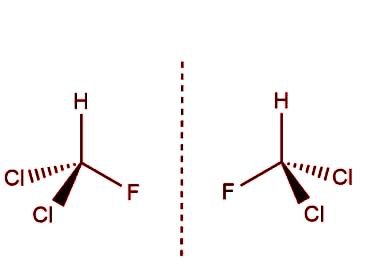 Organic Chemistry
Stereochemistry Stereochemistry is a branch of chemistry that deals with the study of the three-dimensional arrangements of atoms in molecu…
Read more Organic Chemistry
Green Synthesis of Metallic Nanoparticles The synthesis of metallic nanoparticles using environmentally friendly methods, commonly known a…
Read more Organic Chemistry
Peptide Synthesis Peptides are biological polymers consisting of amino acids linked by peptide bonds. They are essential biomolecules in l…
Read more Organic Chemistry
6 difference between resonance and inductive effects S.NO. Resonance Effect Inductive Effect 1. Occurs in unsaturated a…
Read more Organic Chemistry
6 Difference Between Cis And Trans S.NO. Cis Trans 1. Isomers where the functional groups are on the same side of t…
Read more Organic Chemistry
6 Difference Between Ester And Ether The main difference between esters and ethers is the presence of an oxygen atom bonded to two carbon …
Read more